
You can usually remember how you felt yesterday.
Maybe Monday was stressful. Maybe last night felt lonely. Maybe this morning you woke up irritated for no clear reason.
But ask yourself this: how have you been feeling for the last three months?
That question is much harder.
Most of us live emotionally from moment to moment. We notice today’s anxiety, this week’s exhaustion, last night’s overthinking, or the sudden sadness that arrives during a quiet drive home. But we rarely see the bigger emotional map. We remember the loud moments, not the repeating ones.
That is where AI may quietly become useful.
Not because it magically understands your life better than you do. Not because an AI therapist or mental health chatbot can replace human care. But because AI is very good at something humans are surprisingly bad at: noticing patterns across time.

Your Mind Remembers Drama, Not Data
Imagine this.
Riya has been telling herself, “I’m just moody these days.”
Some days she feels fine. Some days she is irritated by tiny things. Sometimes she cancels plans and later feels guilty. Once in a while, she cries without knowing why.
To her, all these moments feel random.
But after three months of short journal entries, a pattern appears:
- She feels emotionally low almost every Sunday night.
- Her anxiety rises before team meetings.
- She uses the word “tired” most often after talking to one specific person.
- She feels better on days when she walks in the morning.
- Her worst emotional dips happen after two or more nights of poor sleep.
Individually, each moment looked small. Together, they tell a story.
That is the difference between a mood and a pattern.
A mood says, “I feel bad today.”
A pattern says, “Something keeps happening before I feel bad.”
And that difference matters.
Why We Miss Our Own Emotional Patterns
You would think we know ourselves best. In some ways, we do. But emotions are slippery.
When you are inside a feeling, you are not calmly analyzing it. You are surviving it.
When you are anxious, your brain is busy predicting danger. When you are sad, it may search for reasons to confirm the sadness. When you are angry, it may focus only on what feels unfair. In the middle of emotion, you are not a researcher. You are a person having a hard moment.
That is why long-term emotional awareness is difficult.
We also tend to rewrite our emotional history. If today is good, we may think, “Maybe I was overreacting last week.” If today is bad, we may think, “I am always like this.” Both can be inaccurate.
AI can help by giving you something more stable than memory: a record.
A mental health journal app or AI journaling app can help you capture small emotional signals over time — not just the dramatic breakdowns, but the ordinary days too. And ordinary days are where many patterns hide.
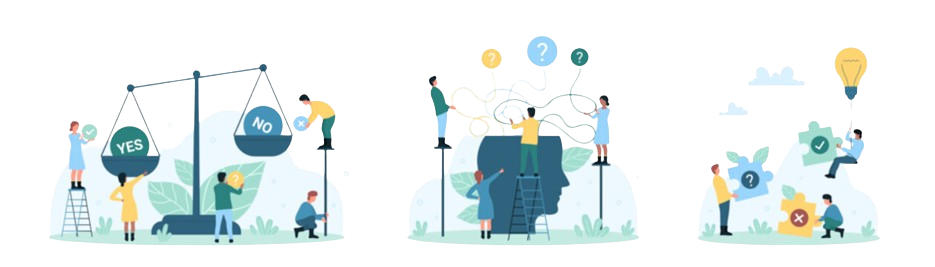
Moments Are Loud. Months Are Honest.
One bad day does not always mean something is wrong.
But ten similar bad days, happening in similar situations, deserve attention.
For example:
- Feeling anxious once before a call may just be nerves.
- Feeling anxious before every call with your manager may be a pattern.
- Feeling lonely one Saturday night may be normal.
- Feeling lonely every weekend after scrolling social media may be a pattern.
- Feeling exhausted after one family event may be understandable.
- Feeling emotionally drained after every conversation with a certain person may be a pattern.
This is where a mood tracking app can become more than a digital diary. Over weeks and months, it can help you see emotional repetition.
Not to label you.
Not to judge you.
Not to diagnose you.
Simply to ask, “Have you noticed this keeps happening?”
That one question can be powerful.
AI Can Connect Dots You Forgot You Drew
Let’s say you use an AI mental health app for a few minutes a day.
You write:
“Today I felt irritated, but I don’t know why.”
Two weeks later:
“Again, I felt tense after the client call.”
A month later:
“I felt heavy all evening. I think I’m tired.”
Individually, these entries may not seem connected. But AI can scan across them and gently highlight recurring themes:
“You often mention tension after client calls.”
“Your mood seems lower on days with less sleep.”
“You frequently describe feeling guilty after resting.”
This is not magic. It is pattern recognition.
AI is not reading your soul. It is reading your words, dates, moods, tags, routines, and repeated phrases. And sometimes, the phrases you repeat casually are the clues you need most.
For example, “I’m tired” may mean many different things:
- physically tired
- emotionally overloaded
- socially drained
- mentally bored
- anxious but avoiding the word anxious
- sad but not ready to say sad
Across one day, it is hard to know. Across months, patterns become clearer.

The Power of Seeing Your Emotional Weather
Think of your emotions like weather.
If it rains today, you do not panic. Weather changes.
But if it rains every evening for a month, you start asking better questions. Is this seasonal? Is there a pattern? Should I carry an umbrella? Should I change my route?
Emotional patterns work the same way.
The goal is not to control every feeling. That would be exhausting. The goal is to understand your emotional climate.
A mental wellness app or AI wellness companion can help you notice:
- which situations repeatedly affect your mood
- what kind of people leave you feeling calm or tense
- what routines protect your energy
- when stress usually builds up
- what emotions you avoid naming
- which coping habits actually help over time
This turns self-care from guessing into learning.
Instead of saying, “I need to fix my life,” you may realize, “I need to stop scheduling heavy conversations late at night.”
Instead of saying, “I’m failing,” you may notice, “My anxiety spikes when I don’t prepare in advance.”
Instead of saying, “I’m just an emotional person,” you may discover, “My mood drops when I isolate for too long.”
That is a very different conversation with yourself.
Why Monthly Patterns Feel Kinder Than Daily Judgments
Daily mood tracking can sometimes feel harsh.
You may open an app, mark your mood as low, and think, “Again? What is wrong with me?”
But monthly reflection can feel more compassionate.
A single bad entry can make you feel broken. A pattern can help you feel understandable.
There is relief in realizing your emotions are not random failures. They often have context. They have triggers, rhythms, build-ups, and recovery points.
For example, AI might help you notice:
“Your difficult days often happen after several days of pushing through without rest.”
That insight does not shame you. It explains you.
Or:
“You tend to feel more hopeful after writing, walking, or talking to someone supportive.”
That does not solve everything, but it gives you a direction.
This is where AI emotional support can be useful. Not as a final answer, but as a mirror that remembers what you forget.
The Best Emotional Patterns Are Practical
The point of noticing patterns is not to create a complicated emotional spreadsheet.
The point is to make life slightly easier.
Once you notice a pattern, you can make small changes:
- If Sunday nights are difficult, create a softer Sunday evening routine.
- If anxiety rises before meetings, prepare notes 30 minutes earlier.
- If social media worsens comparison, avoid it before sleep.
- If certain conversations drain you, add recovery time afterward.
- If journaling helps, make it a five-minute habit instead of waiting for crisis moments.
This is where tools like an AI self care app, stress relief app, or anxiety support app can help people build awareness slowly. The value is not only in the chat. It is in the emotional trail the chat leaves behind.
Even three short check-ins per week can create more than 150 emotional data points in a year. That is a lot of self-knowledge from a few minutes at a time.

Where ChatCouncil Fits In
Platforms like ChatCouncil are built around this quiet, everyday kind of support. It offers AI-powered counselling, journaling tools, mood tracking, guided meditations, and 24/7 mental health support for stress, anxiety, and emotional wellness. Instead of waiting for a breaking point, users can reflect regularly and begin noticing what their emotional patterns are trying to tell them.
That is the real promise of a thoughtful AI therapy app: not replacing human connection, but helping you stay connected to yourself between the big moments.
AI Should Notice Patterns, Not Put You in a Box
There is one important caution.
Emotional pattern recognition should feel helpful, not limiting.
You are not your mood chart. You are not your anxiety score. You are not a weekly report.
AI should never make you feel trapped inside a label like “an anxious person” or “a negative person.” A good mental health AI chatbot should help you ask better questions, not reduce your identity to data.
For example, instead of saying:
“You are always stressed.”
A better reflection would be:
“Stress seems to appear more often around work deadlines. Would you like to explore what happens before those moments?”
That difference matters.
The goal is curiosity, not judgment.
What You Can Start Tracking Today
You do not need to write long diary entries. You do not need perfect grammar. You do not need deep emotional language.
Start with small notes.
Try tracking:
- Mood: What am I feeling today?
- Energy: Do I feel full, low, restless, or drained?
- Trigger: What happened before this feeling?
- Body signal: Tight chest, headache, heavy eyes, fast heartbeat?
- Need: Rest, clarity, food, movement, space, reassurance?
- Support: What helped even a little?
Over time, these small notes become a map.
And sometimes, the map shows you something surprisingly gentle: you are not unpredictable. You are responding to things. Your emotions have reasons, even when those reasons are not obvious at first.
The Quiet Gift of Looking Back
There is something powerful about looking back and realizing, “I have seen this pattern before.”
It gives you a pause.
The next time anxiety appears before a meeting, you may think, “This is that familiar wave. It usually passes after I prepare.”
The next time sadness arrives on Sunday evening, you may think, “This happens when I feel the week coming at me too fast. I need a slower transition.”
The next time you feel emotionally exhausted, you may think, “This is not laziness. This is what happens when I ignore my limits for too long.”
That is not a cure. But it is awareness.
And awareness gives you choices.
AI can help you notice emotional patterns across months, not moments, because it can hold the timeline when your mind is busy holding the feeling. It can remember your words when you move on from them. It can gently show you the repetition you were too close to see.
Your emotions are not random noise.
Sometimes, they are messages repeated patiently over time.
AI may simply help you hear them sooner.