
It’s late at night. Your body is tired, but your brain refuses to power down. You replay a conversation from earlier. You fast-forward to tomorrow’s meeting. Then next month’s deadline. Then five years into the future. Within minutes, your mind has built an entire disaster timeline and none of it has happened.
This is future-tripping anxiety - the mental habit of living in imagined worst-case scenarios instead of the present moment. It can feel responsible, even intelligent. But over time, it quietly drains your energy, focus, and emotional wellbeing.
Let’s explore why it happens, how it affects your well being and mental health, and most importantly, how to gently return to today.

What Exactly Is Future-Tripping?
Future-tripping isn’t the same as planning. Planning is intentional and solution-focused. It leads to action. Future-tripping is repetitive and fear-driven. It leads to rumination.
When you plan, you think:
“I’ll prepare for this presentation.”
When you future-trip, your mind says:
“If this presentation goes badly, my boss will lose trust, my career will stall, and I’ll never recover.”
Notice how quickly the brain jumps from one small uncertainty to a life-altering conclusion. That jump is anxiety at work.
Psychologists describe anxiety as a tendency to overestimate threats and underestimate coping ability. Research consistently shows that most of what we worry about never actually occurs and when challenges do arise, people typically handle them better than expected. Yet anxiety doesn’t respond to logic easily. It responds to uncertainty, and uncertainty is part of life.
Why the Brain Does This
Your brain is not trying to sabotage you. It’s trying to protect you.
Thousands of years ago, anticipating danger meant survival. The human nervous system evolved to scan for threats. Today, however, the “threat” is rarely a predator. It’s an unanswered email, a delayed reply, or a hypothetical mistake.
When you future-trip, your amygdala - the brain’s alarm center - activates as though danger is imminent. Stress hormones rise. Your heart rate increases. Your muscles tense. Even though you’re safe, your body prepares to fight or flee.
This is why future anxiety feels so real. The scenario may be imagined, but the physiological response is genuine. Over time, this constant activation can impact mental wellbeing, sleep quality, concentration, and even physical health.
Living in constant anticipation of “what if” keeps your nervous system in a state of background stress.
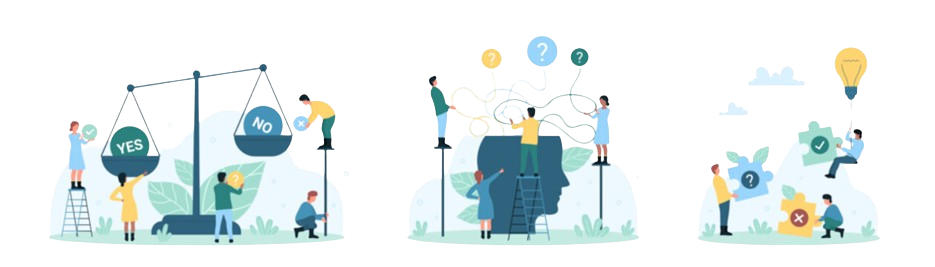
The Hidden Cost of Living Ahead
At first glance, worrying about the future can feel productive. You may believe that rehearsing every negative possibility will make you prepared. But there’s a subtle cost.
When you spend hours mentally time-traveling, you lose access to the present moment. You may notice that even positive experiences feel muted. You’re physically in a conversation, but mentally reviewing potential problems. You’re on vacation, but thinking about work. You’re with family, but scanning for future complications.
This constant forward-scanning can reduce joy and emotional connection. It narrows your focus to threats instead of opportunities. Over time, it affects well being and mental health by reinforcing the belief that danger is always just around the corner.
Future-tripping also creates a false sense of control. Worry feels like preparation, but it rarely produces solutions. Instead, it often increases indecision and drains mental energy that could have been used for action.
Common Everyday Future Spirals
Future-tripping doesn’t always look dramatic. Often, it shows up in subtle daily moments.
You send a message and don’t get a reply. Within minutes, your brain builds a narrative: “Did I say something wrong? Are they upset? Is this relationship changing?”
You make a small mistake at work. Suddenly, your mind jumps to long-term consequences: “This will ruin my reputation.”
You notice a mild physical symptom. Anxiety whispers: “What if it’s serious?”
These spirals happen quickly because the anxious brain fills gaps with worst-case stories. The key thing to remember is this: thoughts are not predictions. They are possibilities generated by a cautious mind.

How to Interrupt the “What If” Loop
The goal is not to eliminate all future thinking. The goal is to reduce its dominance over your daily life.
1. Identify the Pattern
Instead of getting lost inside the thought, pause and name it:
“I’m future-tripping right now.”
Labeling the pattern activates your rational brain. It creates psychological distance. You move from being inside the fear to observing it.
That small shift can reduce the intensity of the spiral.
2. Separate Possibility from Probability
Anxiety thrives on possibility. Almost anything is possible. But far fewer things are probable.
Ask yourself:
- Is this likely?
- What evidence do I actually have?
- How often has this specific fear come true in the past?
This doesn’t dismiss risk entirely. It simply brings perspective. Most feared outcomes are low-probability events amplified by imagination.
3. Build a Coping Plan Instead of a Catastrophe
If a fear feels persistent, write it down. Then add a second column: “If this happened, what would I do?”
You might realize:
- You would ask for support.
- You would adjust your plan.
- You would learn and adapt.
This exercise is powerful because it reminds you that you have coping skills. Journaling for mental health is particularly effective here. When thoughts move from your head onto paper, they often shrink in intensity. Wellness journaling helps organize scattered fears into manageable reflections.
Over time, journaling therapy strengthens emotional resilience and enhances mental health by proving that uncertainty does not equal helplessness.
4. Ground Yourself in Sensation
Future-tripping exists in imagination. Grounding exists in sensation.
Pause and notice:
- The feeling of your feet on the floor.
- The temperature of the air.
- The sound of distant noise.
- The rhythm of your breath.
This sensory focus tells your nervous system: “Right now, I am safe.” It shifts your brain from prediction mode to presence mode.
Meditations for mental health that emphasize breathing and body awareness can significantly calm stress responses. Even five minutes of intentional breathing can regulate your system.
5. Schedule Your Worry
It sounds counterintuitive, but giving worry a time slot works. Choose a 10-minute window each day dedicated to thinking through concerns.
When anxiety arises outside that time, tell yourself:
“I’ll think about this later.”
This builds mental boundaries. Worry no longer controls your entire day.

When You Start Thinking “I Need Help”
Sometimes future-tripping becomes overwhelming. You may find yourself thinking, “I need help” or “Maybe I need therapy.” That thought doesn’t mean you’re failing. It means you recognize that constant anxiety is exhausting.
Structured support can significantly enhance the quality of life. Therapy provides tools to challenge catastrophic thinking. Guided health journaling and emotional tracking can build self-awareness. A supportive mental health app can also offer daily reflection prompts and coping exercises when anxious spirals hit unexpectedly.
With the growth of AI in mental health, some platforms now provide structured check-ins and guided conversations designed to support and mental health growth in accessible ways. For example, ChatCouncil integrates journaling for mental health, emotional reflections, and practical grounding exercises into a private space focused on emotional wellbeing. Tools like these are not replacements for professional care, but they can act as consistent health support between sessions or during stressful periods.
Seeking support is not weakness. It’s a proactive step toward your wellness.
A Perspective Shift on Uncertainty
The uncomfortable truth is that life will always include uncertainty. The goal isn’t to eliminate “what if” entirely. It’s to build trust in your ability to handle whatever arises.
Instead of asking, “What if everything goes wrong?” try asking, “What if I am more capable than I think?”
Confidence doesn’t come from certainty. It comes from repeated experiences of coping. Each time you return to the present instead of spiraling into imagined disaster, you strengthen that trust.
Returning to Today
Right now, pause.
Look around. Notice your surroundings. Take one slow breath. Nothing catastrophic is happening in this exact second. Your mind may be projecting, but your body is here.
Today is manageable. This hour is manageable.
Future-tripping anxiety convinces you that constant vigilance equals safety. But safety often comes from presence, from recognizing that this moment, not tomorrow’s possibility, is what you can actually influence.
You don’t have to solve next year tonight.
You don’t have to prevent every possibility.
You only have to live this day.
And when your mind drifts again because it will gently guide it back. Not with frustration. Not with judgment. But with compassion.
Because your brain is trying to protect you.
Now, you’re learning how to protect your peace - one present moment at a time.