
There’s a weird moment that doesn’t get talked about enough.
It happens when you finally stop doing the thing that “helps.”
You stop doomscrolling at night.
You quit replying instantly to everyone.
You take a break from overworking.
You try a day without the snacks, the nicotine, the reels, the constant background noise.
And instead of feeling proud… you feel exposed.
Not because the coping mechanism was “good,” but because it was familiar. It was your emergency exit. Your way to regulate. Your way to get through.
So when it’s gone, something honest appears:
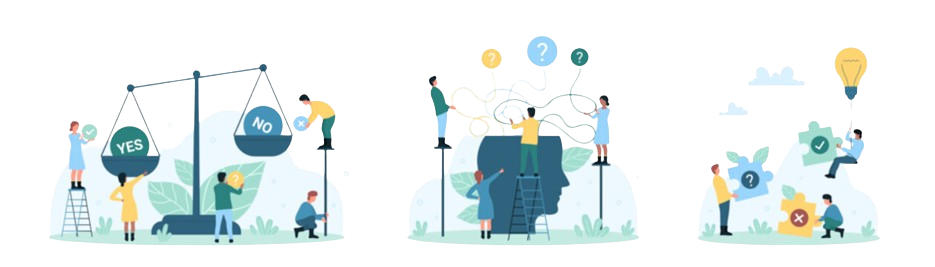
The identity gap - the uncomfortable space where your coping habit used to be.
And the question that follows is surprisingly scary:
Who am I without the thing I use to survive my feelings?

Coping Mechanisms: Not “Bad Habits,” But Survival Strategies
Most coping mechanisms begin as helpers.
They aren’t chosen on a calm Tuesday. They’re chosen during stress, grief, loneliness, pressure, uncertainty. They form because your mind and body are trying to keep you functional.
That matters, because it’s easy to shame yourself when you’re trying to change:
- “Why am I like this?”
- “Why can’t I stop?”
- “What’s wrong with me?”
Nothing is “wrong” with you for having coping mechanisms. You’re human in a world that regularly overloads humans.
And overload isn’t rare. Globally, WHO estimates that in 2021, nearly 1 in 7 people were living with a mental disorder.
Depression and anxiety are also widespread - WHO estimates 5.7% of adults experience depression, and anxiety disorders affect about 4.4% of the global population.
In that context, coping isn’t a quirky personality trait. It’s often the nervous system saying: I need relief.
The Secret Problem: Your Coping Starts to Become Your Personality
Here’s where it gets tricky.
At first, you use the coping mechanism occasionally.
Then it becomes a routine.
Then it becomes a label.
Then it becomes an identity.
- “I’m just a busy person.” (work as avoidance)
- “I’m the funny one.” (humor as deflection)
- “I’m the strong one.” (self-reliance as isolation)
- “I’m low maintenance.” (needs as danger)
- “I don’t get attached.” (detachment as protection)
When a coping mechanism keeps you safe long enough, your brain starts treating it like you.
Not because it’s true because it’s consistent.
So when you try to let it go, it feels like losing a part of yourself, even if that part was exhausting.
That’s the identity gap.
A Relatable Example: The “Productive” Version of You
Let’s talk about a common one: overworking.
Imagine someone who always has something going on. Calls, meetings, side projects, deadlines. They look successful from the outside.
But inside, the schedule is a shield.
Because when they stop moving, they start feeling.
And feeling brings questions like:
- “Am I enough without achievements?”
- “Why do I feel lonely when I’m not busy?”
- “What do I actually want?”
So they stay productive.
Then one day they take a break, maybe by choice, maybe because their body forces it. And suddenly they don’t know who they are.
Not because they’re lazy.
Because they’ve never met themselves without adrenaline.
This is why people often say, “I need help,” right when they finally slow down because slowing down reveals what speed was hiding.
Why “Removing the Coping” Can Make You Feel Worse at First
This part is important: if you stop a coping mechanism and feel worse, it doesn’t mean you’re failing.
It often means you removed your short-term regulator before building a long-term one.
Many coping mechanisms work through quick relief:
- distraction
- numbing
- control
- reassurance
- stimulation
Your brain learns: Do this → feel better fast.
So when you don’t do it, your brain protests. It throws discomfort at you like a toddler throwing toys: “Bring it back.”
That discomfort is the gap.
And the gap is where growth happens, if you don’t panic and run back to the old exit.
The “Coping Stack”: What You Reach for When Life Hits
Most people don’t have just one coping mechanism. They have a stack.
Here are a few common categories (no judgment-just recognition):
1) Numbing
Food, alcohol, binge-watching, scrolling, shopping, constant noise.
2) Controlling
Over-planning, perfectionism, obsessively checking, micromanaging.
3) Performing
People-pleasing, being “the responsible one,” never saying no.
4) Escaping
Avoiding hard conversations, disappearing, quitting suddenly, ghosting yourself.
5) Overthinking
Replaying, analyzing, predicting worst outcomes, “solving” feelings with logic.
The identity gap shows up when you remove one and realize the rest were supporting it like pillars.

So… Who Are You Without Your Coping?
This is the real question but it’s also the wrong first question.
Because “who are you” is too big when you’re standing in the gap.
A better question is:
What are you protecting when you cope like this?
Under almost every coping mechanism is a need:
- safety
- rest
- connection
- validation
- control
- relief
- belonging
When you identify the need, you can meet it in healthier ways. That’s how you enhance mental health without shaming the version of you that survived.
How to Cross the Identity Gap (Without Falling Back)
This isn’t about becoming a perfect person. It’s about building well being and mental health practices that make coping less necessary.
1) Replace the coping with a pause, not a personality makeover
Start tiny. If you usually cope immediately, build a 90-second gap:
- breathe slower than you want to
- unclench your jaw
- name the emotion (“I feel rejected / overwhelmed / scared”)
That small pause is a new identity seed: I’m someone who notices.
2) Use journaling, but make it structured
Unstructured venting can become repetition. Structured health journaling creates clarity.
Try these prompts for journaling for mental health:
- What was I trying to avoid feeling?
- What did I need in that moment?
- What story did I tell myself about what this means?
- What would I do if I believed I was safe enough to feel this?
That’s not just writing. That’s journaling therapy style reflection—turning coping into understanding.
3) Build “identity anchors” that aren’t coping
An identity anchor is a small behavior that says who you are becoming:
- “I keep promises to myself.”
- “I ask for support.”
- “I can sit with discomfort for two minutes.”
Anchors are simple. But they compound.
4) Regulate your body, not just your thoughts
Sometimes you don’t need more insight, you need nervous system calm.
This is where meditations for mental health help, especially short ones:
- 3 minutes of breath counting
- a quick body scan
- a slow walk without your phone
These are not “spiritual.” They’re practical. And over time, they enhance the quality of life because you’re less controlled by urgency.
5) Add support so you’re not doing it alone
If you’re trying to change deep patterns, health support matters. That might mean friends, community, a professional, or tools that keep you consistent when motivation drops.
If you feel like you need help but don’t know where to start, a mental health app can act as a bridge especially for building routine reflection. Platforms like ChatCouncil are designed around structured conversations, guided prompts, and wellness journaling that helps you notice patterns without drowning in them. It’s not about replacing therapy; it’s about creating steadier daily support for your wellness habits and emotional wellbeing.
And yes, sometimes you might still decide you need therapy for deeper work. That’s not failure. That’s maturity.

A Gentle Truth: Coping Mechanisms Aren’t the Enemy
Your coping mechanisms are proof that you adapted.
They’re evidence you tried to stay afloat. In many cases, they kept you functioning when you didn’t have better tools.
But you don’t have to keep living inside the survival version of yourself.
The identity gap feels empty because it used to be filled with automatic relief. Now, it’s a space where you get to choose.
Not all at once. Not perfectly. But steadily.
You don’t discover who you are by thinking harder.
You discover who you are by practicing:
- honesty over performance
- presence over numbness
- support over isolation
- rest over escape
- compassion over control
That’s the real answer to “who am I without my coping mechanisms?”
You’re not nothing.
You’re someone in transition.
And that gap, uncomfortable as it is, might be the most honest beginning of your well being.