
Riya didn’t hate people.
She laughed at jokes. She replied on time. She showed up to birthdays, weddings, and group trips with a perfectly normal smile and a perfectly acceptable amount of enthusiasm.
But there was a moment, always the same kind of moment, when her chest would tighten like a seatbelt locking.
It happened when someone looked at her too directly and said something simple like:
“I feel like I don’t really know you.”
Or worse:
“How are you… really?”
That’s when her brain would sprint for the nearest exit. Not physically - she’d stay seated, nod, maybe even make a small joke. But inside, she’d retreat. She’d pick a safe answer. She’d hand over a version of herself that was pleasant, polished, and impossible to misunderstand.
Because being alone felt sad sometimes.
But being seen?
Being seen felt dangerous.

The strange safety of being unseen
Loneliness is painful. It can feel like hunger you can’t fix with food.
But loneliness is also predictable.
When you’re alone, you don’t have to explain yourself. You don’t have to risk being misread. You don’t have to wonder if you said too much, if your feelings were “too intense,” if your needs were “too much.”
When you’re alone, you don’t have to manage reactions.
And for some of us, that’s not a preference. It’s a coping strategy.
Because being seen doesn’t just mean someone notices you.
It means someone might know you.
And knowing creates power.
The power to accept you… or reject you.
To hold you… or use you.
To stay… or leave.
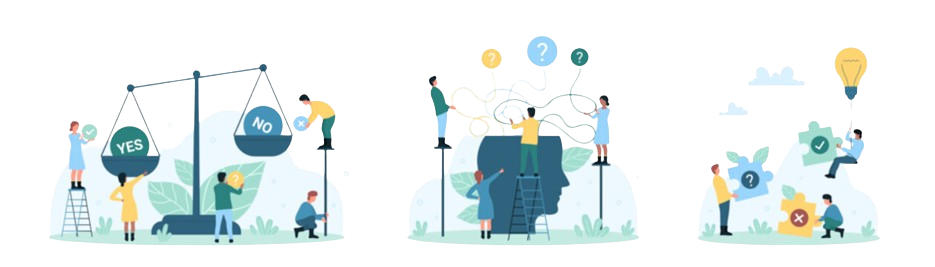
So the nervous system does math:
Alone = aching, but safe.
Seen = hopeful, but risky.
When “being seen” gets associated with danger
Most people don’t wake up one day and decide: I’d rather feel isolated than understood.
That relationship usually forms slowly, through experiences that teach you a quiet lesson:
1) You learned that honesty has consequences
Maybe you shared feelings once and got laughed at.
Maybe you opened up and someone called you dramatic.
Maybe you needed comfort and someone responded with annoyance.
Maybe your vulnerability was used against you later.
So your system adapted.
It decided: We won’t do that again.
2) You learned that needs make you a burden
Some people grow up in environments where the “easy” child gets praised.
The child who doesn’t ask for much.
The one who doesn’t cry.
The one who says “It’s okay” before anyone asks.
Over time, self-protection starts to look like self-erasure.
You become skilled at being low maintenance, high functioning, and emotionally convenient, while your emotional wellbeing quietly pays the bill.
3) You confuse attention with danger
For many people, attention meant pressure:
- “Why are you like this?”
- “People are watching.”
- “Don’t embarrass us.”
- “Be normal.”
So being noticed didn’t feel warm. It felt like a spotlight.
And a spotlight doesn’t feel like love when you’re not sure you’ll be safe in it.
The brain treats rejection like pain (and it’s not poetic - it's literal)
Here’s the part that makes your reaction make sense.
A famous neuroimaging study found that social exclusion activates brain regions involved in distress and “social pain,” including the anterior cingulate cortex, and the activity tracked with how upset people felt.
So when your body panics at the idea of being misunderstood or rejected, it’s not because you’re weak.
It’s because your brain treats belonging like survival.
Which is also why being seen can feel like stepping into traffic without a helmet, especially if past experiences taught you that closeness comes with a cost.
The invisible trap: solitude starts protecting you from connection
At first, staying private feels like control:
- You share less, you get hurt less.
- You stay low, you get judged less.
- You remain “fine,” you avoid inconvenience.
But the longer you do it, the more it becomes a pattern:
You don’t just avoid unsafe people.
You avoid the risk of closeness altogether.
And this is where things get tricky.
Because humans don’t only need food, sleep, and Wi-Fi.
We need connection.
Strong social relationships aren’t just emotionally nice, they’re linked with real health outcomes. One large meta-analysis found that people with stronger social relationships had a significantly higher likelihood of survival compared to those with weaker relationships.
And at the same time, loneliness and social isolation are associated with increased risks of health problems and premature death, as highlighted by WHO’s work on social connection.
So the paradox is brutal:
You hide to feel safe.
But the hiding slowly harms your well being and mental health.

Why it feels “safer” to be alone than to be known
If being seen feels dangerous, it’s often because it triggers one (or more) of these fears:
Fear of being misunderstood
Not everyone has had the experience of being deeply, accurately understood. When you haven’t, being seen feels like handing someone a fragile object and hoping they don’t drop it.
Fear of being a burden
You may think: If they see the real me, I’ll be too heavy.
So you shrink.
Fear of losing control
Being seen means someone might respond in ways you can’t predict. They may ask questions. They may offer help. They may disappoint you. They may care.
And if you’re not used to receiving, even care can feel threatening.
Fear of needing
This one is quiet and sharp:
If I let myself be seen, I might start wanting things.
And wanting implies risk.
The cost of invisibility isn’t just loneliness - it’s self-abandonment
When you stay unseen long enough, you don’t only disappear from others.
You start disappearing from yourself.
You stop asking:
- What do I feel?
- What do I need help with?
- What do I want?
You become a person who can function, but not fully live.
And in a world where more than 1 billion people are living with mental health conditions, it’s worth taking seriously when the “I’m fine” mask becomes your permanent face.
Not to scare you, just to name something real:
Your mind deserves health support before the breaking point.
A small shift that changes everything: “safe visibility”
Being seen doesn’t have to mean full exposure.
You don’t have to tell your entire life story to deserve care.
You can practice safe visibility - letting yourself be known in small, controlled, kind steps.
1) Try the “two-sentence truth”
Instead of a long explanation, give two sentences:
- “This week has been heavy. I’m trying to not pretend it isn’t.”
- “I’m okay-ish. I could really use a little support and mental health space.”
Short. Honest. Contained.
2) Name the feeling, not the whole history
You don’t have to narrate everything. Start with a label:
- “I feel overwhelmed.”
- “I feel lonely.”
- “I feel scared to be honest.”
This is where journaling therapy can help because labeling feelings is a bridge back to yourself.
3) Ask for consent before you share
This is underrated and powerful:
“Can I share something a bit personal? Do you have space for it?”
It protects you, and it protects them. It turns vulnerability into a choice, not a spill.
4) Make a personal policy on mental health
A simple rule you live by:
- “I don’t open up to people who mock softness.”
- “I share in layers.”
- “I choose emotional safety over emotional performance.”
A personal policy on mental health isn’t dramatic - it’s protective. It can enhance mental health in a way that’s practical, not poetic.
When you don’t know where to start, start on paper
For people who feel exposed in conversation, journaling for mental health can be a gentler doorway.
Not perfect journaling. Not aesthetic journaling.
Just truth.
Try these prompts for health journaling or wellness journaling:
- What part of me feels dangerous to show?
- When did I first learn that being seen has consequences?
- What do I fear people will do if they understand me?
- What would “being seen safely” look like in one sentence?
- If I could say “I need help” without shame, what would I ask for?
This is a quiet health guide back to your own voice.
A calm support option when talking feels like too much
Sometimes you’re not ready to open up to a person but you’re also tired of carrying everything alone.
In that in-between space, a mental health app like ChatCouncil can be a soft first step: guided reflections, wellness journaling, and meditations for mental health that help you process without performing. It also offers AI in mental health support - private conversations that can help you organize thoughts when you’re thinking “need help” or even “need therapy,” but don’t know how to begin. It’s built around your wellness, gently and consistently.
What “being seen” can become (with time)
Riya didn’t suddenly turn into someone who shares everything.
But she started doing something smaller and braver.
She started letting one safe person see one real thing.
A bad day.
A fear.
A need.
And here’s what surprised her:
The danger wasn’t always real.
Sometimes, it was old memory wearing new clothes.
Being seen didn’t fix her life overnight.
But it did something quieter.
It helped her stop living like she had to earn love by being invisible.
Because yes - being alone can feel safer than being seen.
But over time, the goal isn’t to become fearless.
The goal is to become supported.
To build health and support into your life in ways that enhance the quality of life, one honest sentence, one safe connection, one small act of self-return at a time.
And if you’re reading this with a tight chest thinking, this is me - please hear this gently:
You’re not broken.
You’re protecting yourself.
Now you just deserve a version of protection that also lets you be known.