
There is a particular kind of compliment that sounds beautiful at first, then slowly becomes heavy.
“You have so much potential.”
People usually say it with admiration. Teachers say it when a student seems unusually bright. Parents say it when a child learns quickly. Managers say it when an employee performs beyond their role. Friends say it when they believe someone is capable of a bigger life.
At first, it feels like being seen.
Then, over time, it can start to feel like being watched.
Because once people call you “high potential,” you are no longer just a person growing at your own pace. You become a promise. A future result. A story everyone expects to end impressively.
And that expectation can quietly become exhausting.
The mental health problem with being “high potential” is not that potential is bad. It is that potential can turn into pressure when people forget there is a human being underneath it.

When Potential Becomes a Job Description
Being “high potential” often begins early.
Maybe you were the child who always got good marks. The student who teachers trusted. The sibling who was “more mature.” The friend who gave advice. The employee who learned faster than others. The founder, artist, athlete, or professional who seemed destined for something big.
People praised you for being capable.
So you learned to stay capable.
You learned to be impressive before you learned to be honest. You learned to perform confidence before you learned to ask for help. You learned to carry expectations before you fully understood what they weighed.
The world kept saying:
“You are going to do great things.”
But inside, another sentence began forming:
“So I’m not allowed to mess this up.”
That is where potential becomes a job description.
You are not simply living. You are maintaining the image of someone who is supposed to become extraordinary.
The Invisible Pressure of Being “The One Who Will Make It”
High-potential people often receive a strange kind of love: love mixed with expectation.
Family members may talk about your future with pride. Teachers may compare others to you. Friends may assume you will be successful. Colleagues may expect you to handle more. Managers may keep stretching your limits because “you can take it.”
This can feel flattering, but it also creates a hidden fear:
What happens if I become ordinary?
Not unsuccessful. Not terrible. Just ordinary.
What if your life becomes decent but not remarkable?
What if your career grows slowly?
What if your talent does not turn into fame, money, awards, or leadership?
What if your “potential” was real, but your path is not dramatic?
What if you need rest, support, or a slower season?
For people labeled high potential, normal human limits can feel like personal betrayal.
They may not simply think, “I am tired.”
They think:
“I am wasting what I was given.”
That is a painful way to live.
The Trap of Being Good at Many Things
Some high-potential people struggle because they are not just good at one thing. They are good at many things.
They can write well, speak well, lead well, learn quickly, solve problems, understand people, and adapt fast. This sounds like a blessing, and often it is.
But it can also create identity confusion.
When you can do many things, choosing one path can feel like killing ten others.
You may wonder:
- “Should I build a business or pursue academics?”
- “Should I take the stable path or the creative one?”
- “Should I focus on money, meaning, impact, or freedom?”
- “Should I use my talent for what I love or what others respect?”
- “What if I choose wrong and waste my potential?”
Choice becomes stressful because every option carries the grief of the options you did not choose.
People may call you lucky for having many possibilities. They may not see how heavy possibility can become when every path feels like proof of who you are.
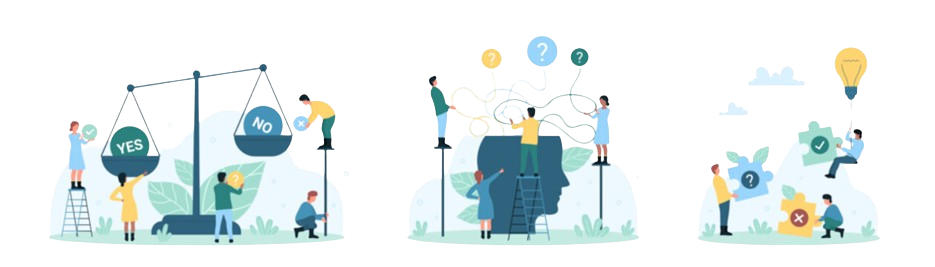
Perfectionism Often Hides Behind Potential
High-potential people are often praised for high standards.
But high standards can quietly turn into perfectionism.
You do not just want to do well. You feel like you must justify everyone’s belief in you. You may delay starting because the result must be impressive. You may avoid finishing because finished work can be judged. You may over-prepare for simple things because being “unprepared” does not fit your identity.
Research has found that perfectionism has increased across generations of young people, especially in cultures where achievement, comparison, and competition are intense. A widely cited meta-analysis by Thomas Curran and Andrew Hill found increases in several forms of perfectionism among college students between 1989 and 2016.
This matters because perfectionism does not always look like neat notes and polished work.
Sometimes it looks like procrastination.
Sometimes it looks like fear of feedback.
Sometimes it looks like quitting before people can see you struggle.
Sometimes it looks like doing nothing because you cannot do it brilliantly.
The high-potential person may seem lazy from the outside.
Inside, they may be terrified of being average at something that matters.
Success Can Become Proof, Not Joy
One of the saddest parts of being high potential is that success may stop feeling good.
Instead of feeling proud, you feel relieved.
You get the grade, close the deal, win the award, clear the interview, launch the project, impress the room — and for a few minutes, the pressure reduces.
Then the next expectation appears.
The mind says:
“Good. Now maintain it.”
This is how achievement turns into emotional rent. You keep paying to stay in the same identity.
People may celebrate your wins, but they may not realize those wins are not giving you peace. They are only temporarily protecting you from the fear of disappointing everyone.
That is not ambition anymore.
That is survival wearing a medal.
The Loneliness of Being the “Strong” One
High-potential people are often trusted with responsibility.
They are the ones people ask for help. The ones who “figure it out.” The ones who stay calm in public. The ones who make others feel that everything will be okay.
But this can become lonely.
Because when people believe you are strong, they may forget to check whether you are struggling.
You may hear:
“You’ll manage.”
“You always do well.”
“I’m not worried about you.”
“You’re smart, you’ll figure it out.”
These sentences can be meant kindly, but they can also make you feel invisible.
Being capable does not mean being emotionally untouched. Being intelligent does not mean being immune to anxiety. Being talented does not mean you never need support.
Even high-performing students and young adults are not protected from mental health struggles. The CDC reported that in 2023, 40% of U.S. high school students experienced persistent feelings of sadness or hopelessness, while 20% seriously considered attempting suicide.
Potential does not cancel pain.
Sometimes it simply teaches people to hide pain more convincingly.

The Fear of Wasting Your Gift
High-potential people often carry a quiet moral pressure around talent.
They feel that if they have ability, they must use it fully. If they have opportunity, they must maximize it. If they have intelligence, they must achieve something important. If they have privilege, they must prove they deserved it.
This can create a constant sense of debt.
You are not just trying to live well. You are trying to justify your existence.
That is a lot of pressure for one person.
The fear of wasting potential can make rest feel wrong, experimentation feel risky, and slow growth feel shameful. It can make you choose impressive paths over honest ones. It can make you stay in roles that look successful but feel empty. It can make you ignore your body because your future seems more important than your present.
But a gift is not meant to become a cage.
Your potential is not a debt collector.
Why “You Can Be Anything” Can Feel Terrifying
Modern culture often tells high-potential people:
“You can be anything.”
It sounds empowering.
But emotionally, it can become overwhelming.
If you can be anything, then every choice feels loaded. Every delay feels costly. Every mistake feels like evidence that you are mishandling your life. You may constantly wonder whether you are doing the “best possible” thing with your abilities.
The pressure is not just to succeed.
It is to optimize.
Best career. Best city. Best relationship. Best body. Best network. Best routine. Best personal brand. Best future.
This creates a life where you are always auditing yourself.
But human beings are not startups. You are not a product that needs endless optimization. You are allowed to be unfinished without being a failure.

How High-Potential People Can Protect Their Mental Health
The answer is not to reject your potential. It is to relate to it more gently.
1. Separate identity from performance
You are not your latest result.
A bad day does not erase your ability. A failed attempt does not cancel your future. A slower season does not mean you have lost your gift.
2. Choose direction instead of perfection
You do not need a perfect life plan. You need the next honest direction.
Ask yourself:
“What feels meaningful enough to try, even if it does not prove everything about me?”
That question is much kinder than, “What choice will maximize my entire life?”
3. Let yourself be a beginner
High-potential people often avoid things they are not immediately good at.
But being bad at something new is not humiliation. It is evidence that you are still alive, still learning, still allowed to grow without performing.
4. Build private emotional support
If everyone sees you as capable, it becomes even more important to have spaces where you do not need to perform. A mental health journal app, AI journaling app, mood tracking app, or anxiety support app can help you notice when your self-worth is getting tangled with achievement.
ChatCouncil offers an AI mental health app with 24/7 mental health support, guided meditations, journaling tools, mood tracking, and AI counselling for stress and mental wellness. For someone carrying high expectations quietly, an AI wellness companion can offer private mental health support when it feels hard to say, “I’m struggling,” out loud.
5. Redefine potential as capacity, not obligation
Potential does not mean you owe the world constant excellence.
It means you have capacity.
Capacity can be developed slowly. It can change shape. It can include rest, mistakes, detours, relationships, joy, and seasons where you are not proving anything.
You Are More Than the Future People Imagined for You
Being high potential can be a beautiful thing.
It can mean curiosity, talent, depth, sensitivity, leadership, creativity, discipline, or unusual insight. It can open doors and create opportunities.
But it can also become a mental burden when your future becomes more important than your humanity.
You are allowed to grow without turning your life into a performance.
You are allowed to disappoint outdated expectations.
You are allowed to choose peace over applause.
You are allowed to become someone real, not just someone impressive.
Maybe the goal is not to “live up to your potential” in the way everyone imagined.
Maybe the goal is to build a life where your potential has room to breathe.
Because you were never meant to be only a promise.
You were always a person first.